NO. 067 | RETURNING TO PLAY.
WHY CREATIVITY MATTERS MORE THAN WE THINK
Lately, I’ve been thinking a lot about play. In part because I’ve had the flu and found myself in a stretch of forced rest, with a little more time on my hands than usual. The surprise pause gave me space to notice something I don’t often slow down enough to consider. Not play in a nostalgic or idealized way, but in the practical, everyday sense of how it actually affects us. How it tends to slip into the background of adult life, slowly and almost without notice, as responsibilities take center stage. It gets crowded out by deadlines, planning, organizing, juggling. All the things required to be a functional adult, which, to be fair, are necessary too. Somewhere along the way though, play starts to feel optional. Or worse, frivolous. Something we’re meant to outgrow once life gets serious.
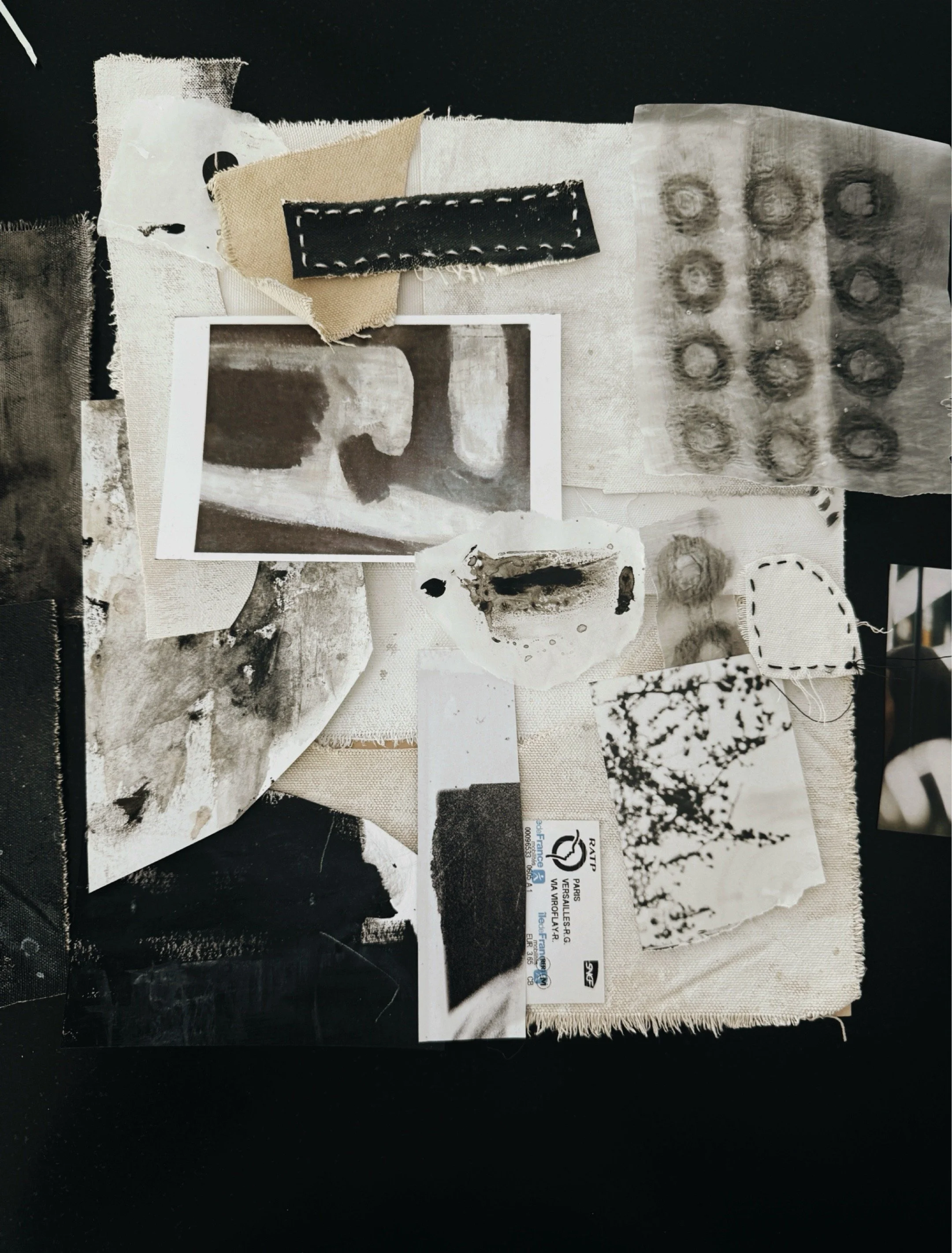
For me, play often looks simple. Wandering an art supply store with no list, touching paper I don’t need, imagining projects I may never make. Sitting on the floor of my local bookstore flipping through magazines, scanning images and words for inspiration. Engaging in making art, taking my time rearranging parts and pieces of a collage on a substrate. Sometimes it’s laying in the grass, staring at the sky, letting my mind drift wherever it wants to go. There’s no destination and zero productivity points earned.
What we tend to forget is that play does something very real inside the brain. When we engage in low pressure, creative activity, the nervous system settles. Stress melts or loosens its grip. The brain shifts out of vigilance, control and judgment and into curiosity. Different regions begin communicating more freely, especially those tied to imagination, emotional regulation and flexible thinking. In simple terms, play tells the body you’re safe enough to explore freely.
That’s why creativity can feel so regulating, even when it’s unstructured and imperfect. You don’t need a plan or a point. It can be as simple as doodling, rearranging objects, taking photographs, making marks, collecting textures or colors. Getting a little lost. Losing track of time. Letting go of the urge to optimize every moment of your day. These small acts invite focus without force and attention without demand. They give the mind somewhere to rest and exhale. And couldn’t we all use a bit of that?
I’ve also noticed that when I allow myself this kind of play, my thinking feels clearer afterward. Not more frantic, but more open. Problems often soften or stop feeling quite so fixed as my perspective widens. It reminds me that creativity and logic aren’t opposites, they support each other. When the nervous system calms, the mind often follows.
In a culture that rewards productivity and performance, play can feel inefficient. And if we’re honest, we don’t always trust adults who are good at it. I’ll admit, I’m a little envious of those people. They seem to know something the rest of us have forgotten. Enjoying yourself too much starts to look suspicious, as if it must mean you’re avoiding something more important or lacking motivation. But play isn’t avoidance. It’s another way of engaging. One that restores flexibility, loosens rigidity and gives us more options for meeting life in a fast paced, complex world.
What I’ve learned, often reluctantly, is that I don’t usually play because I feel inspired or light or carefree. I play when I feel a little stuck, tired or overly serious. And more often than not, the shift comes afterward. Not because I planned it or tried to extract a lesson, but because I stopped managing my inner life so tightly and allowed something more spacious to enter.
So if things have felt heavy lately, think of this less as advice and more as an invitation. Make a little room for yourself and for that childlike part of you that intuitively knows how to wander. Maybe it’s ten minutes, maybe an hour if you can find it. Do something with no outcome attached. Let curiosity lead instead of productivity and see where play might take you.
I’ve never been one for big, lofty resolutions, especially at the start of a new year. But I am interested in adding a little more play back into my days in 2026. Not as a goal to track or perfect, just as a way of making space for simple acts of creativity that I know bring me joy and clarity when things start to feel tight or overly serious. Play isn’t an escape from real life. It’s one of the ways we stay connected to it. What might it look like for you to make a little room for play too?
xx,
Michel