
YOU DON’T NEED TO BE MORE POSITIVE. YOU NEED TO BE MORE HONEST.
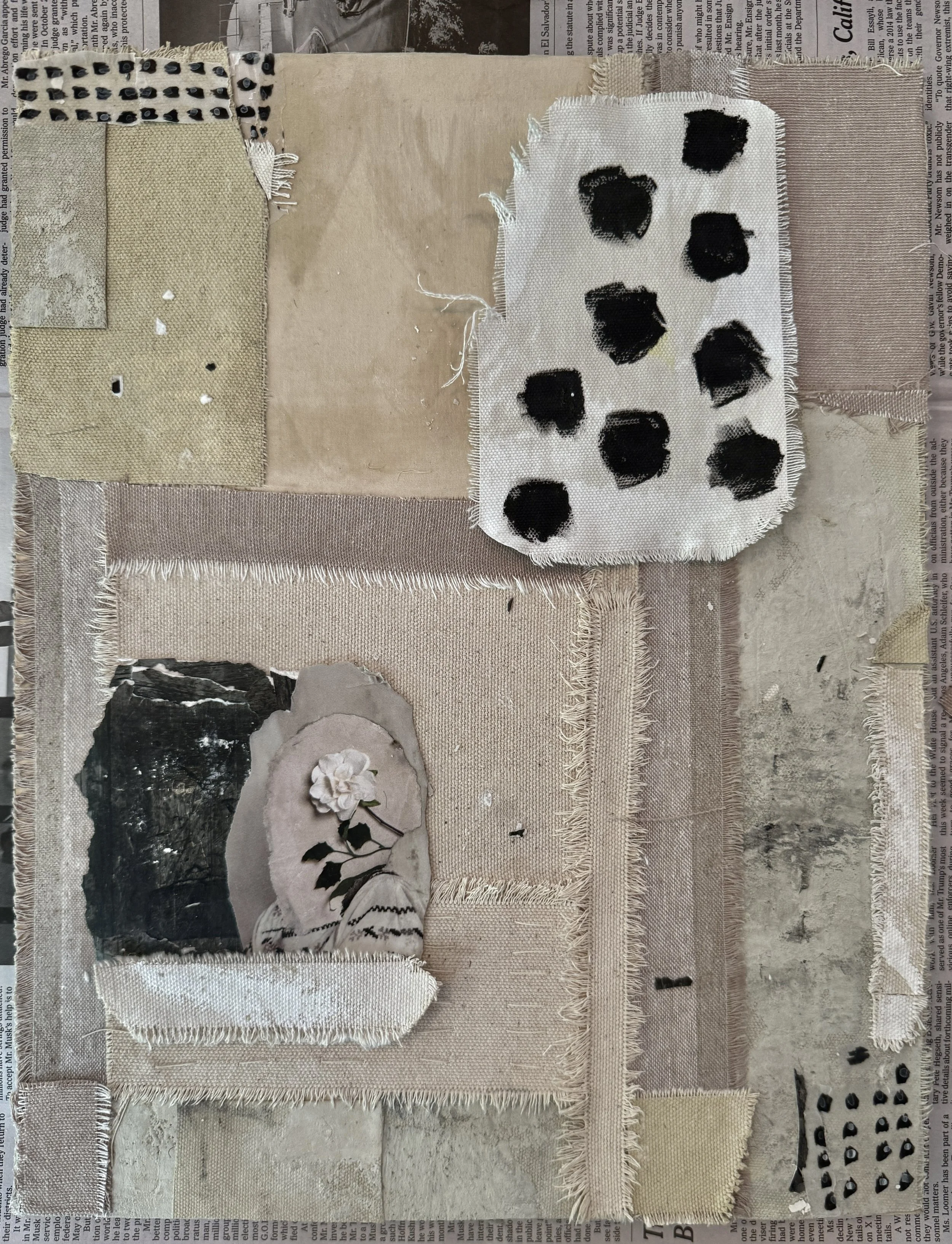
Studio. In process.
If I hear one more person tell someone who is struggling that they just need to be more positive or that they have so much to be grateful for, I might lose my mind a little. I say that with love and complete sincerity.
There's an unspoken rule most of us learned somewhere along the way. Feelings are only acceptable if they're delivered in a way that doesn't disrupt anyone, make anyone uncomfortable or inconvenience anyone. So people soften things. They also suppress and ignore. They laugh at the wrong moment. They add “but it's fine” at the end of something that clearly isn't fine. I see it in everyday conversations, and I notice how easy it is to fall into the trap of doing the same. In our society, we're honestly not very good at sitting with people who are struggling or having a hard time without trying to offer advice, fix it, tell them they have a lot to be thankful for or move them out of it. And by the way, that tends to be more about our own discomfort.
We live in a culture that is so focused on positivity that it's started to feel like a requirement instead of something that arises from an authentic, natural place. We really love the person who is upbeat and positive all of the time. The person who’s adept at finding that silver lining. When you're the person who is perhaps more affected by your emotions or experiences and actually express or show this, well, you're treated like someone who needs correcting or like you just need to try harder. There's also this subtle, underlying pressure to stay grateful, stay hopeful, stay strong, even when that’s a mismatch for how you’re feeling on the inside. And when you can't stay positive, it can start to feel like you're doing something wrong instead of just responding honestly to your life. And being a human, by the way.
In my work as a psychotherapist, I've often watched people apologize for their feelings before they are even able to name them. They'll say they know they shouldn't feel this way or that they know others have it worse. I've done this too. It's like we need to make a case for why our feelings are valid before we're allowed to actually have them. We need to prove we're not overreacting or our emotions have to pass some test before we're taken seriously.
Many of us learned in our childhoods to feel shame for having feelings at all, especially the difficult and messy ones. I don’t believe it’s because anything was wrong with us, but because the environments we grew up in didn't always allow for our full range of emotions. Not feeling safe with our emotional expression gets carried into adulthood in ways we often don't even realize, unconsciously shaping the self expression rules we follow. At some point, it becomes being well adjusted and emotionally healthy means being pleasant, palatable. Or perhaps being strong means being unaffected or maybe being evolved means being calm all the time, even when we may intuitively know deep down this is false.
But real emotional health doesn't look like that at all. It tends to look like someone who can tell the truth about what's happening inside of them without shaming themselves or allowing others to shame them for it. And speaking from my own personal experience, that's not easy. I can't tell you how many times I've allowed other people to shame me without saying a word.
I keep coming back to a question that feels more honest than any punchy Pinterest quote. That is, where's the line between choosing helpful thoughts and actually acknowledging how you feel? Because those aren’t always the same thing, right?
Genuinely feeling gratitude can be helpful, but not when someone's in the middle of intense anxiety or distress. In those moments the nervous system is activated, and it’s hard to be more reflective. Telling someone to just be grateful or that they have a lot to be grateful for while they're overwhelmed doesn't calm them. It often makes them feel more alone or misunderstood. It can actually deepen the sense of shame. Gratitude is most powerful when it's invited, not when it's prescribed. Timing does matter in a very big way. And support is received very differently than correction and judgment.
And none of this is an argument against positive thinking. There's real value in cultivating gratitude, in choosing perspective, in noticing what's good. The research supports this and I believe it. The problem isn't positivity itself. The problem is positivity as a way of bypassing the honest acknowledgment that needs to come first. So the sequence does matter. Honesty first, then perspective taking. It’s not the other way around.
You can certainly influence your thoughts, but you can't force a feeling to disappear just because you think it should or because you don't like it or it's inconvenient. Emotions are signals from your nervous system about what's happening inside you and around you. When we try to override them with positivity too quickly, it's often just avoidance disguised as growth. And anxiety doesn't go away when you override it. It usually just goes underground and waits.
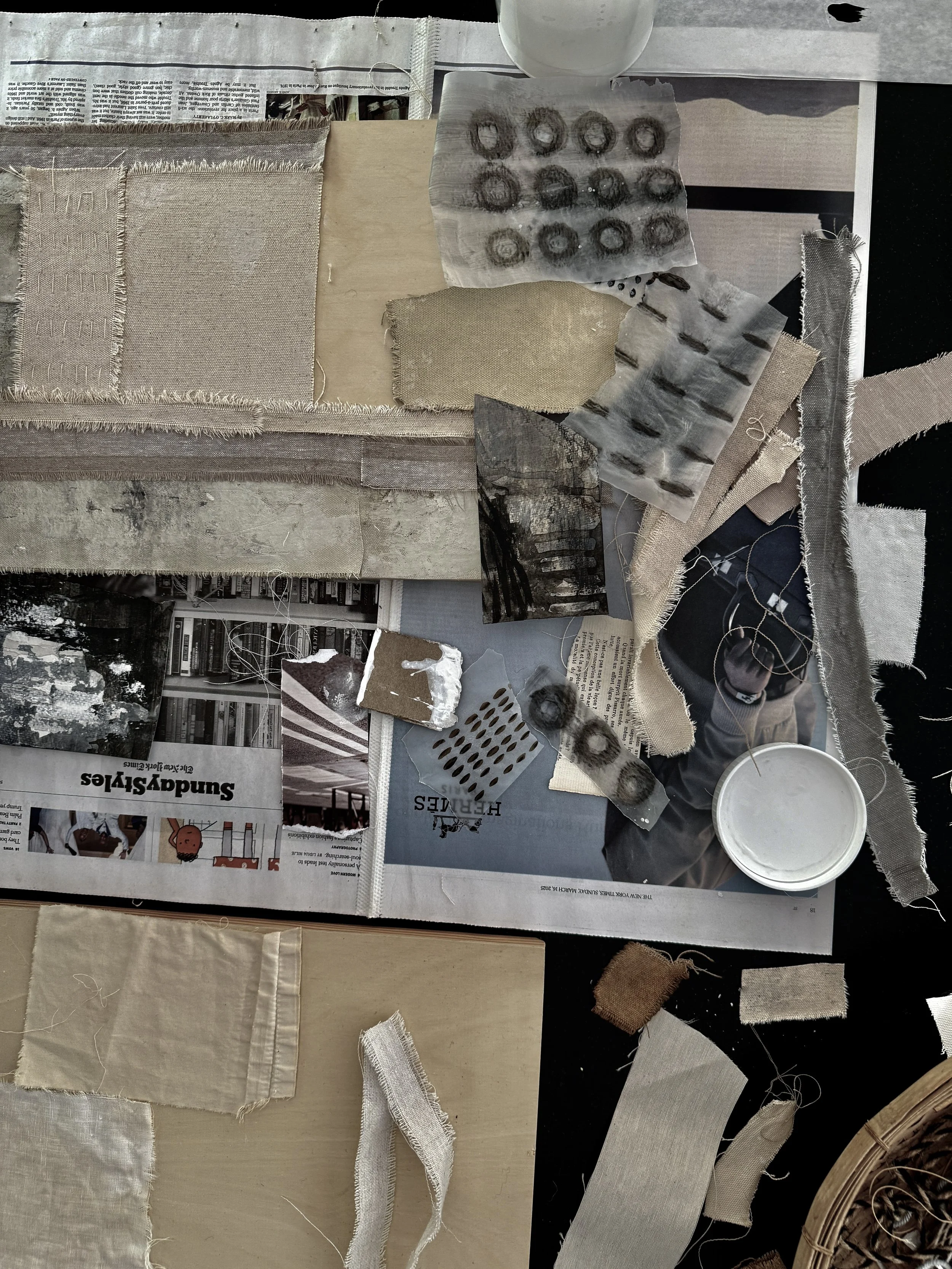
Fragments of Life. Work in progress.
Emotions that aren't acknowledged don't just magically vanish. They tend to show up somewhere else entirely, in the body, in your relationships, in the middle of the night, in the low hum of exhaustion or irritability that you can't quite explain. The goal isn't to indulge every feeling or get stuck inside them either. The goal is to recognize them, understand what they're telling you and respond in a grounded way.
For example, if I tell the truth and say I'm hurt or I'm struggling, and then remind myself that I have support or that this moment will pass, that's regulating. That's perspective. But if I skip straight to everything is fine when it clearly isn't, my system knows I'm not telling the truth. Something in me stays tense because I'm trying to override reality instead of meeting it.
Real gratitude doesn't erase pain. It exists beside it and often times simultaneously. You can be grateful and grieving. You can feel hopeful and discouraged in the same week or even the same day. You can love your life and still feel overwhelmed sometimes. Life is nuanced like that. Growth often comes from learning to hold more than one truth at a time. The both and of being human. Carl Jung spent much of his life and work exploring this very idea, that wholeness doesn't come from eliminating the difficult parts of ourselves but from learning to hold them alongside everything else. That the goal was never to get rid of the dark parts but to learn to carry all of it.
Many of us were taught to treat difficult emotions like problems to solve or ignore instead of experiences to listen to. And to be honest, many of us weren't even taught to identify and acknowledge our own emotions at all. I know I wasn't and certainly didn't have this modeled to me. But emotions aren't obstacles on the path, they're part of the path. They point toward what matters. They show us where something needs care, attention, boundaries or change. They are actually a gift, intelligent information.
Honesty asks more of us than positivity does. It requires a willingness to be present with yourself, to actually listen inward with depth and curiosity. It takes a lot of courage to tell the truth about your inner life in a world that rewards composure and being okay. I'm still working on that part too. But honesty is what creates real stability, because there's nothing inside you that has to keep pretending.
There's something that changes when someone finally stops performing "I'm okay" and just says what's true. A weight is lifted, there's a freedom in not feeling like we have to hide this part of ourselves. A space is created for a person to actually just be who they are, without judgment, with their complex system of emotions. And imagine what it might be like if we were all allowed to do this.
And please know, you don't need to become a shinier version of yourself. You don't need to rush toward a silver lining before you've even named what hurts. Sometimes the most grounded thing you can say is this is what's true for me right now. And that's okay. This kind of honesty is often where real healing begins.
This is part of what A Practice of Noticing is built on, the idea that honest attention to your own inner life is where real steadiness begins. It's coming soon. If you want to be the first to know, join the list.
xx,
Michel